Summoner
12/12/2025
You wake up in the middle of the night to the sound of rushing water. Your eyes snap open in darkness as cold liquid seeps into your bed. The power is out. Emergency sirens wail in the distance. You grab your phone—the screen illuminates ankle-deep water already flooding your bedroom. The weather alert reads: FLASH FLOOD WARNING - SEEK HIGH GROUND IMMEDIATELY. Then you hear it: a low, guttural hiss from somewhere in the darkness of your house. Your blood runs cold as you remember the news report from last week about the alligator farm upstream.
Scene 1
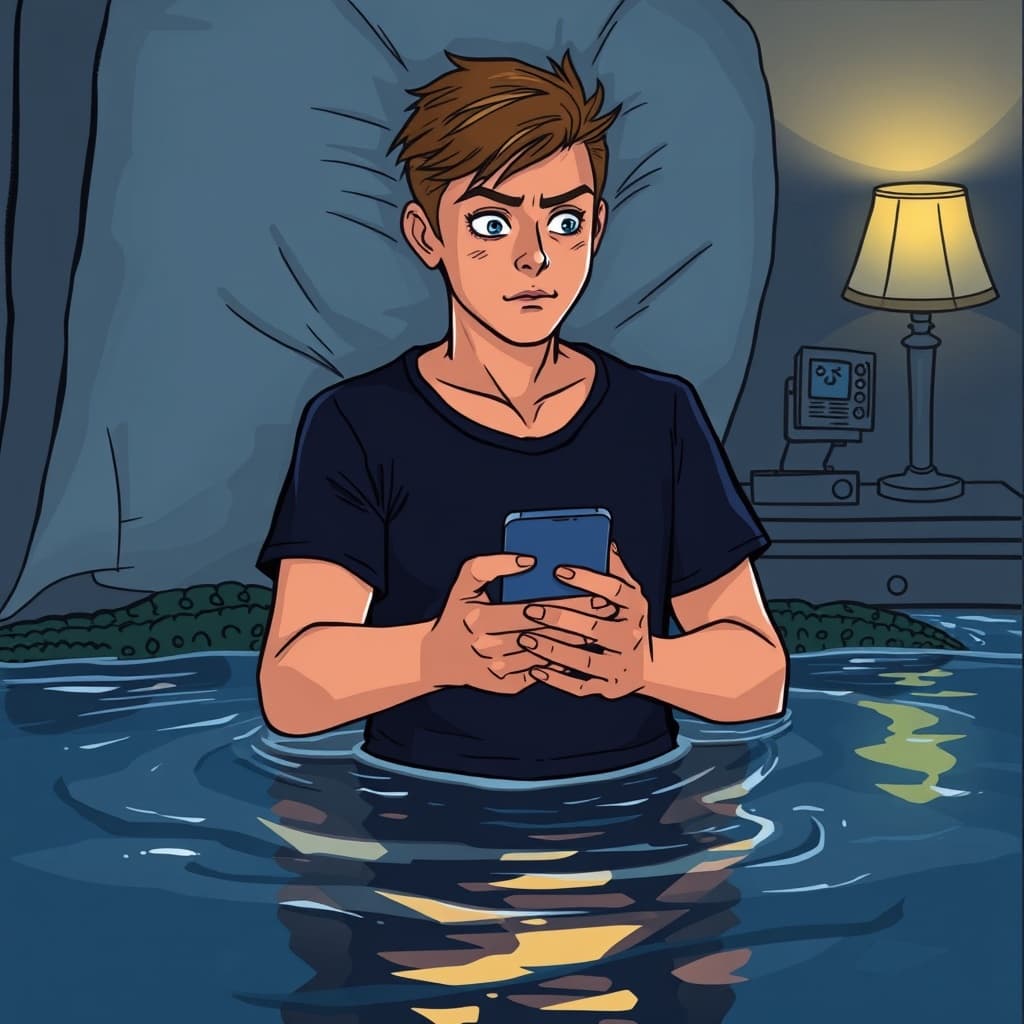
You wake up in the middle of the night to the sound of rushing water. Your eyes snap open in darkness as cold liquid seeps into your bed. The power is out. Emergency sirens wail in the distance. You grab your phone—the screen illuminates ankle-deep water already flooding your bedroom. The weather alert reads: FLASH FLOOD WARNING - SEEK HIGH GROUND IMMEDIATELY. Then you hear it: a low, guttural hiss from somewhere in the darkness of your house. Your blood runs cold as you remember the news report from last week about the alligator farm upstream.
Available Choices
Scene 2
You snatch a baseball bat from beside your bed and push toward the window. The water is rising fast—now at your thighs. As you unlock the window latch, you hear a violent splash behind you. You turn to see a six-foot alligator has entered your room, its tail swishing as it orients toward you. The window is open, but you'd have to turn your back to climb through.
Scene 3
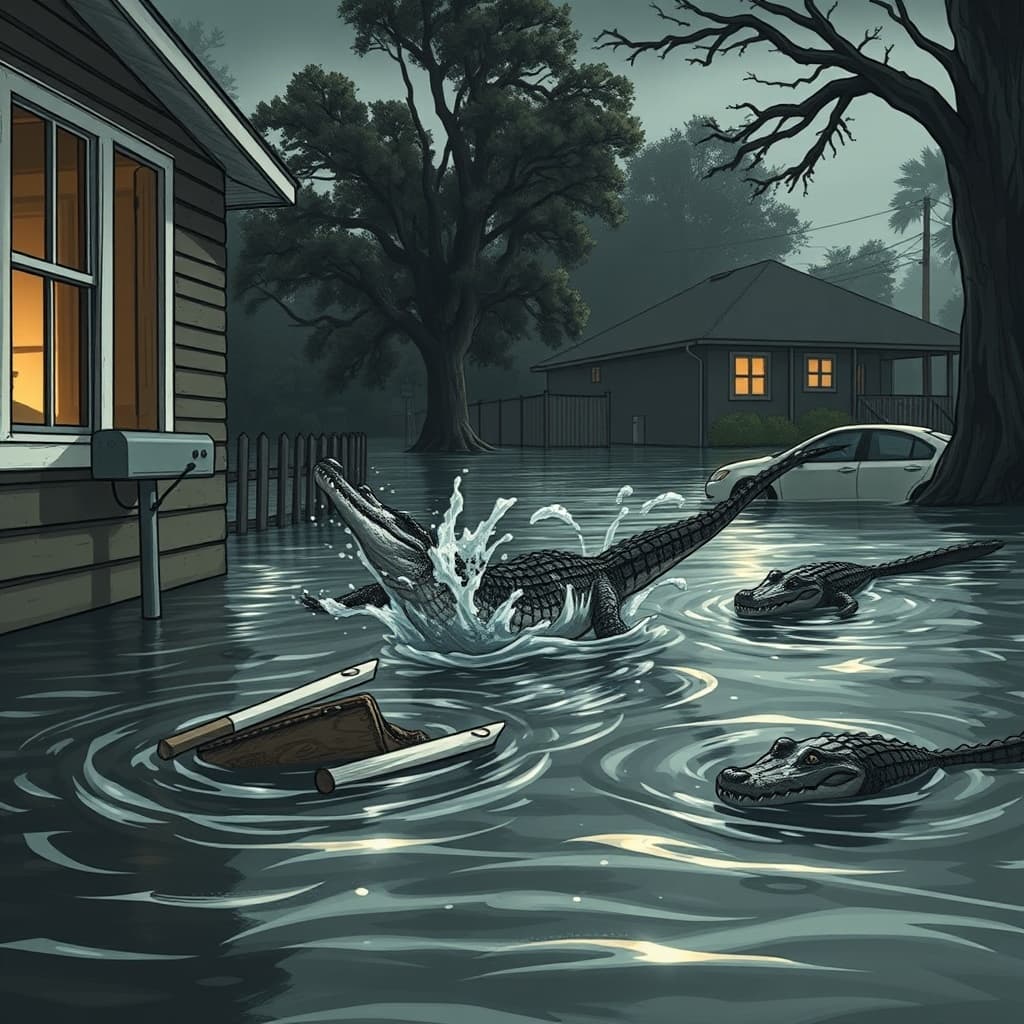
Your heart hammers as you make a split-second decision. You dive through the open window just as the alligator lunges. You hit the floodwater outside with a splash, the current immediately pulling at your legs. You're in your front yard—or what used to be your front yard. The water is chest-deep and flowing like a river. Debris floats past: a mailbox, a child's bicycle, sections of wooden fence. Your house is dark behind you, but you can see other homes on your street, some with lights flickering from upper windows where neighbors are trapped. Then you notice something that makes your stomach drop: at least three more alligators are visible in the murky water around you, their eyes and snouts breaking the surface. Your nearest options are a partially submerged car about fifteen feet away, a tall oak tree to your right, or the roof of your single-story house which you might be able to climb onto from the window you just exited.
Available Choices
Scene 4
You move slowly through the water, trying not to create splashes that might attract attention. Your hands grip the rough bark and you pull yourself up, branch by branch. At about twelve feet up, you're finally out of reach. The view from here is terrifying—your entire neighborhood is underwater. You can hear people calling for help from different directions.
Scene 5
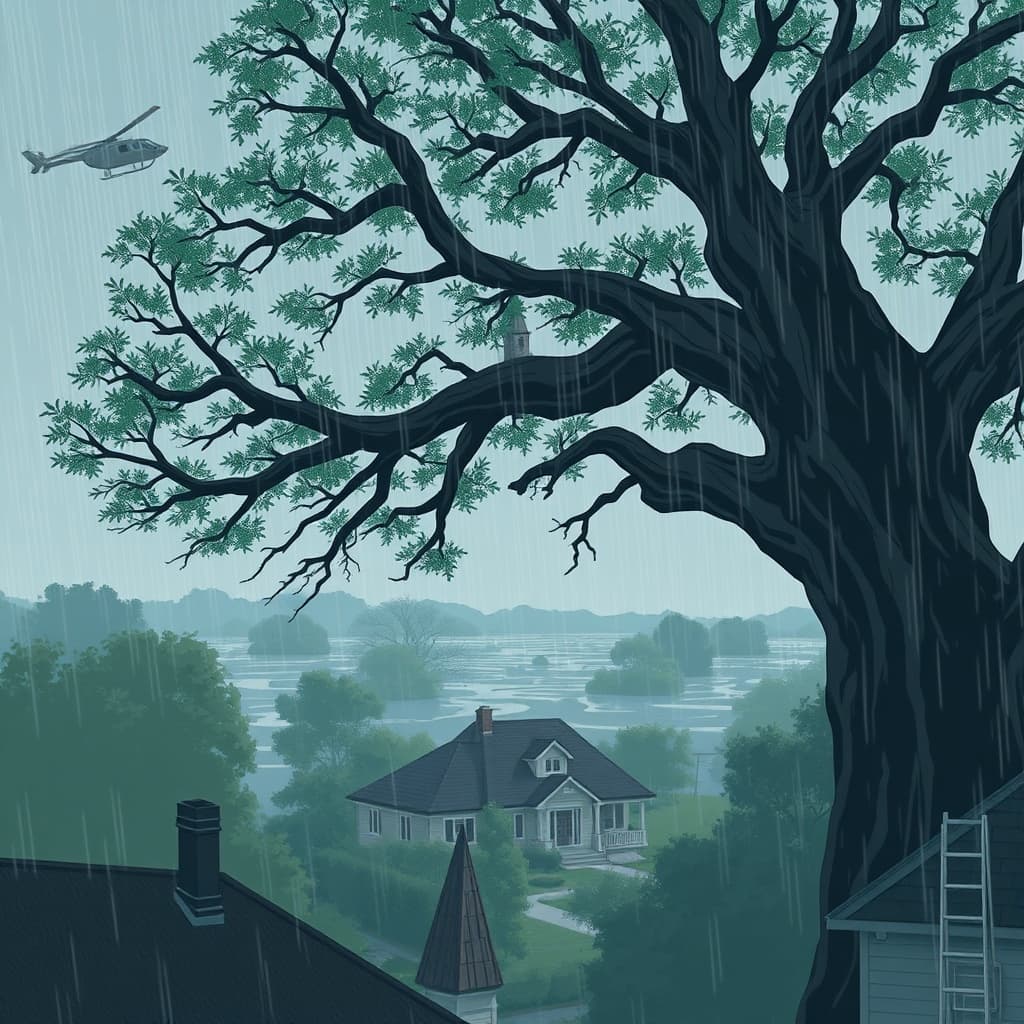
From your perch in the oak tree, you watch the water continue to rise. It's been about twenty minutes, and the flood shows no signs of stopping. Your arms ache from gripping the branches. Then you hear it—the distant thump of helicopter rotors cutting through the rain. A searchlight sweeps across the neighborhood, and you realize rescue crews are starting evacuations. But they're several blocks away, moving slowly from house to house. Suddenly, you hear desperate screaming from a nearby rooftop—a woman and what sounds like a child are trapped on old Mrs. Patterson's house two doors down. The roof looks unstable, sagging in the middle. At the same time, you notice movement in your own attic window—did you leave someone behind? Your elderly neighbor Mr. Chen sometimes visits unannounced. The helicopter is still far away, and those alligators are circling below.
Available Choices
Scene 6
You strip off your wet shirt and wave it like a flag, shouting at the top of your lungs. The searchlight continues its sweep, but it's hard to tell if they've seen you. The helicopter seems to be prioritizing the houses with people on rooftops, and you're partially obscured by branches.
Scene 7
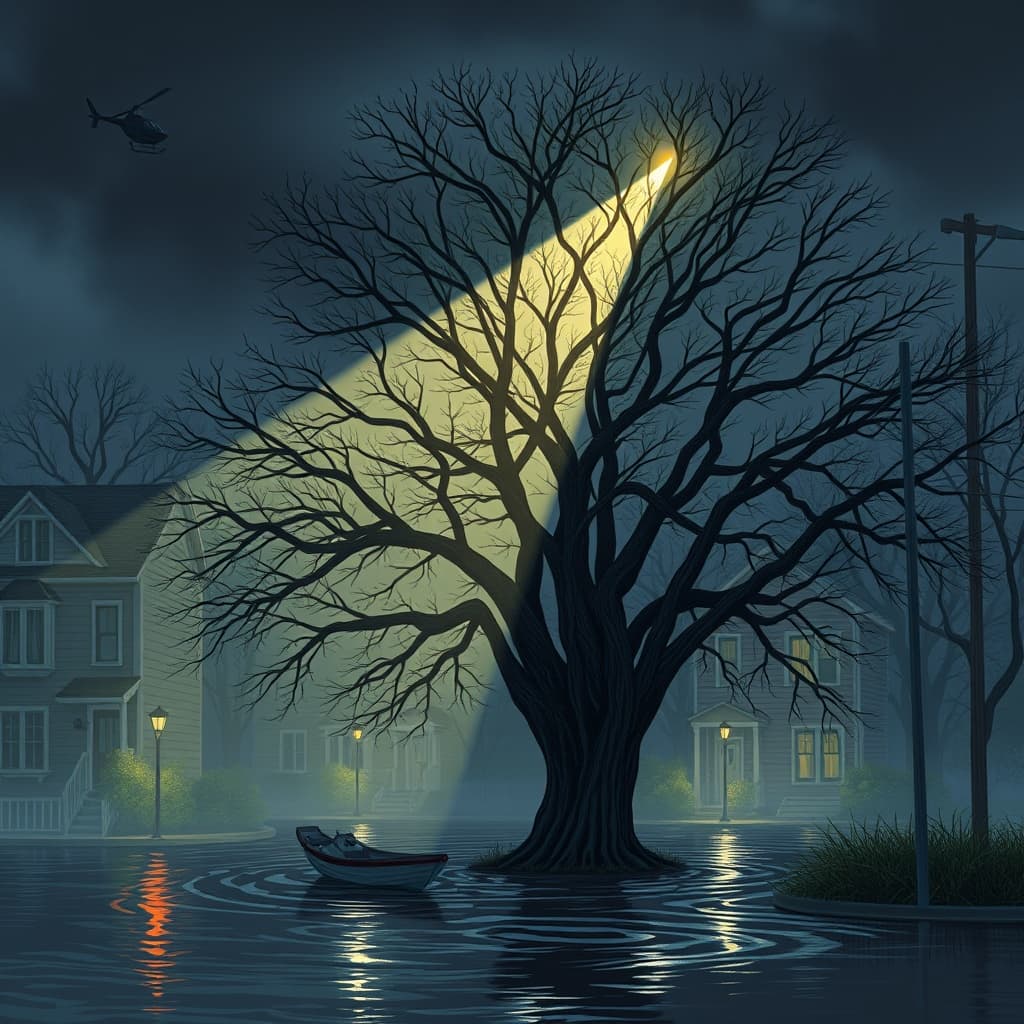
The helicopter's searchlight finally sweeps across your tree. For a brief, hopeful moment, the beam illuminates you completely—but then it continues moving, apparently not registering you among the branches. Your heart sinks as the helicopter begins moving toward the next block, the sound of rotors fading slightly. The water below has risen another foot, now lapping at branches just eight feet beneath you. Then you hear a crack—sharp and ominous. You look toward Mrs. Patterson's house and see the sagging roof beginning to give way. The woman's screams intensify. At the same moment, you hear banging from your attic window—someone is definitely inside your house, and the water is rising toward the attic level. You notice something else: a small motorboat, probably torn loose from someone's property, has drifted into the intersection at the end of your street. It's lodged against a stop sign about forty yards away, spinning slowly in the current. Three different emergencies, and you're alone in a tree with alligators circling below.
Available Choices
Scene 8
You take a deep breath and drop feet-first into the murky floodwater. The cold shocks your system. You start swimming hard toward the boat, trying to keep your movements smooth to avoid attracting the alligators. Halfway there, you feel something brush against your leg.
Scene 9
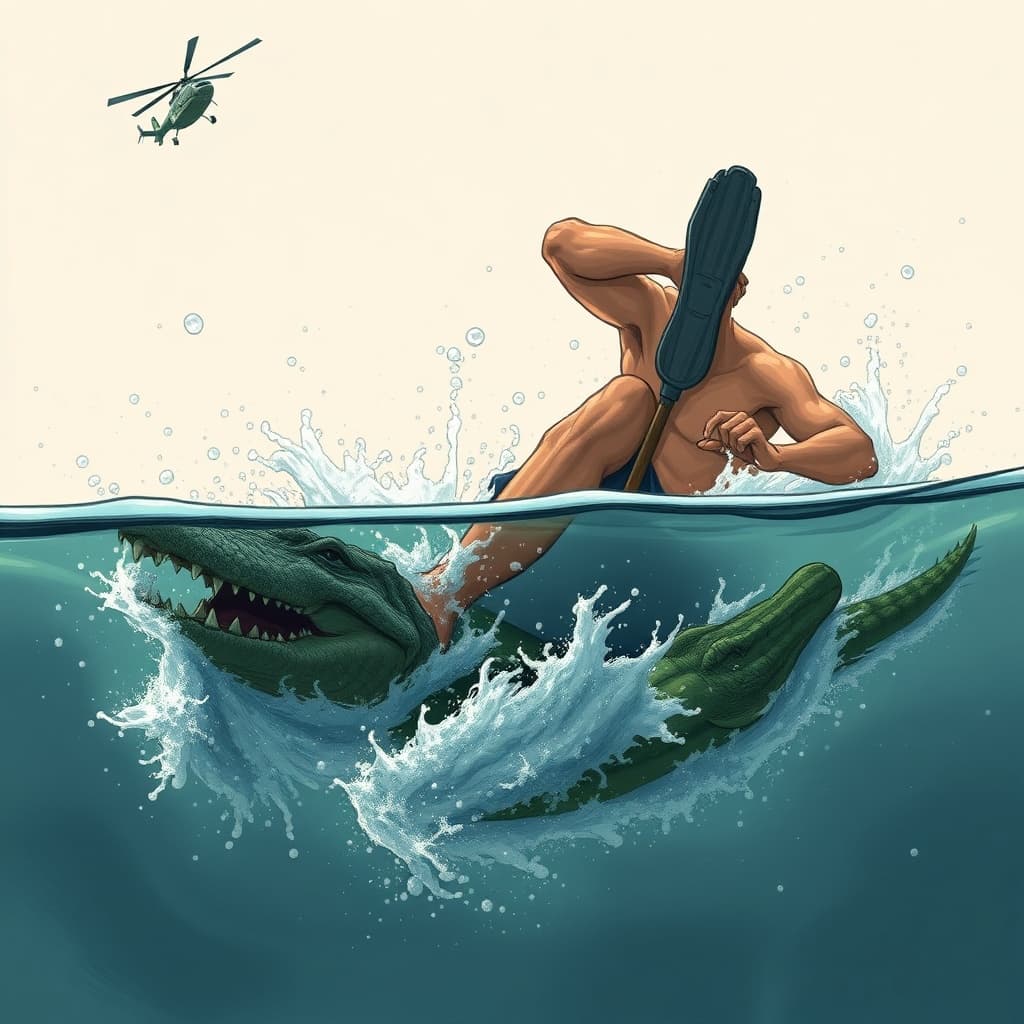
Something large and muscular wraps around your ankle. Panic explodes in your chest as you're yanked downward, water flooding into your mouth. You thrash violently, kicking with your free leg, and connect with something solid. The grip releases. You break the surface gasping and swim with desperate strokes until your hands slam against aluminum—the boat. You haul yourself over the side, collapsing into three inches of water sloshing in the bottom. Your leg is bleeding from where claws raked your skin. The boat rocks dangerously as you catch your breath. You look up to see the helicopter has turned around—your splashing must have caught their attention. The searchlight is sweeping back toward your area. But the boat is taking on water through a crack in the hull, and you spot at least two alligators gliding toward you with renewed interest. In the boat, you find a single oar, a waterlogged life jacket, and a flare gun with one flare remaining.
Available Choices
Scene 10
The flare shoots into the night sky with a brilliant red streak. The helicopter's searchlight immediately locks onto your position, and you hear the rotors growing louder as it changes course directly toward you. But the bright light has also attracted every alligator in the vicinity—you count at least five now circling your sinking boat.
Scene 11
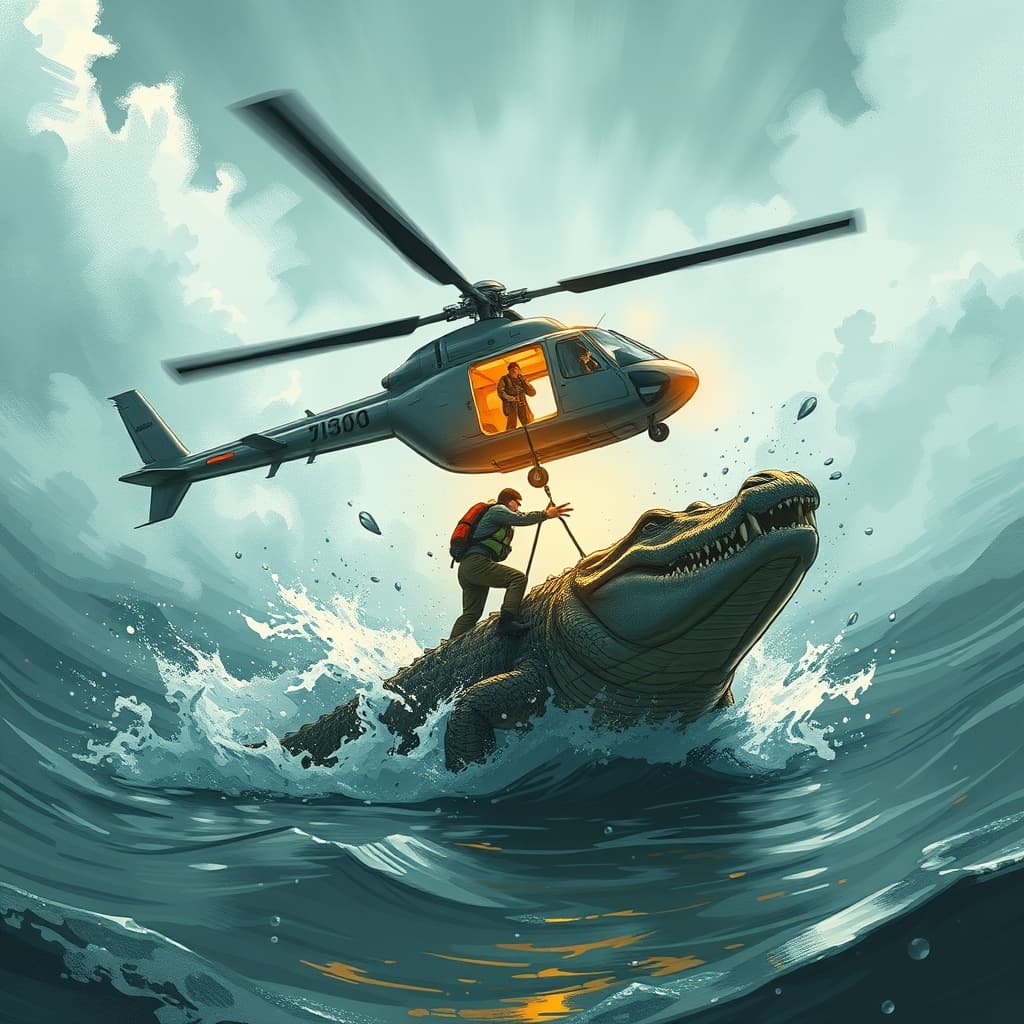
The helicopter hovers directly above you, its downdraft creating violent waves that rock your sinking boat. A rescue harness drops from the open side door, spinning wildly in the rotor wash. You can see the rescue operator gesturing frantically for you to grab it. But the boat is going down fast—water now fills it past your knees. The alligators, agitated by the noise and light, are getting bolder. One lunges at the boat's edge, its jaws snapping just inches from your hand. You reach for the harness, but a massive wave from the helicopter's downdraft nearly capsizes the boat. Through the chaos, you hear the pilot's voice crackling over a loudspeaker: 'WE HAVE LIMITED FUEL! THIS IS OUR LAST PASS IN THIS SECTOR!' Then your blood freezes—over the noise, you distinctly hear a child's scream from Mrs. Patterson's collapsing roof, and the banging from your attic window has become desperate pounding. The harness swings within arm's reach, but you also notice the motorboat's engine—it's partially submerged but might still work if you could start it quickly.
Available Choices
Scene 12
You seize the harness and clip it around your torso. The cable goes taut and you're yanked upward, leaving the sinking boat behind. As you rise, you watch helplessly as Mrs. Patterson's roof gives way with a sickening crack, and your attic window disappears beneath the rising water. The rescue operator pulls you into the helicopter, wrapping you in a thermal blanket, but the weight of who you couldn't save settles heavily on your chest.
Scene 13
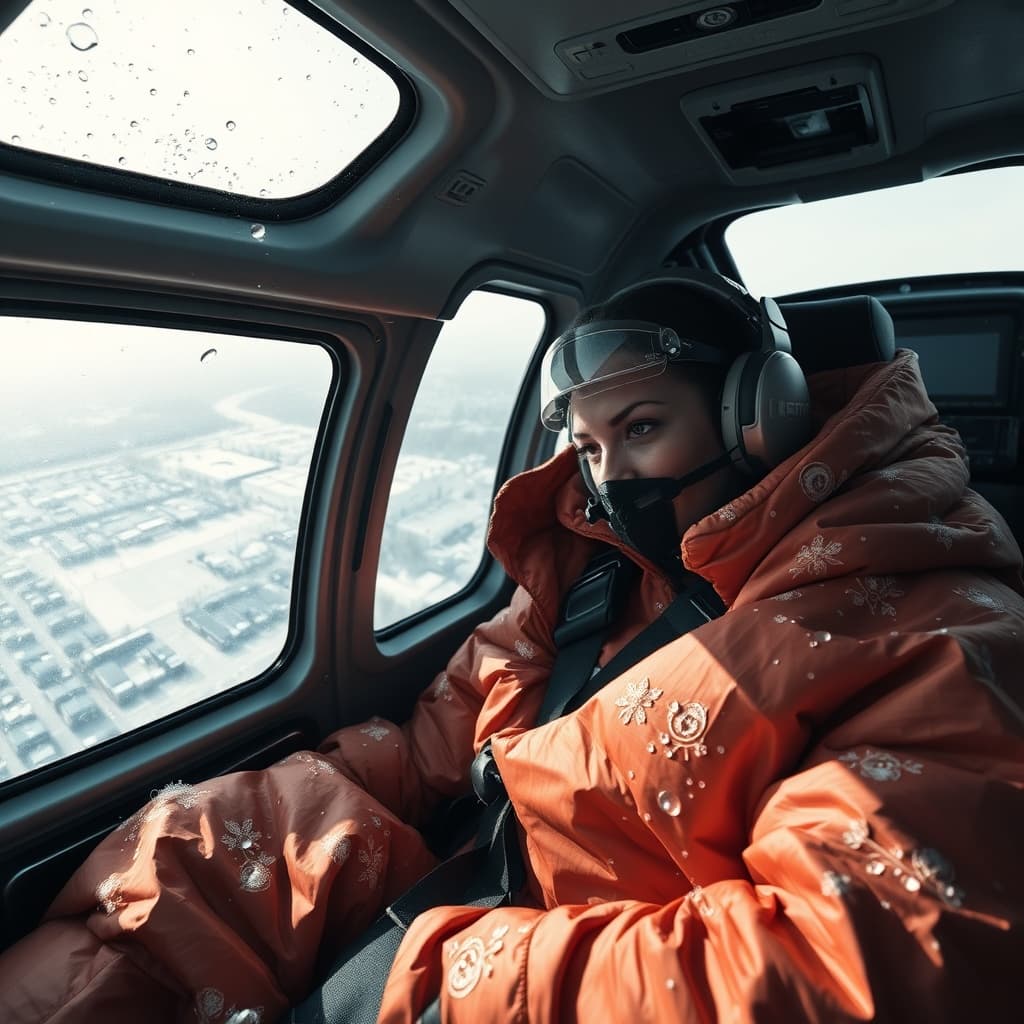
Inside the helicopter, you're wrapped in the thermal blanket, shivering violently as the adrenaline crash hits. The rescue operator, a woman in her forties with kind eyes, checks your leg wound while the pilot banks toward the emergency shelter at Riverside High School. Through your shock and exhaustion, you overhear radio chatter: '...multiple casualties confirmed... dam structural integrity failing... downtown evacuation zone expanding...' The operator catches you listening and her expression darkens. 'The upstream dam is compromised,' she says quietly. 'If it breaks completely, everything downstream gets hit with a twenty-foot wall of water. We're evacuating the high school shelter in thirty minutes.' You look out the window—hundreds of people are gathered on the school's roof and upper floors, including many families with children. The operator hands you a tablet showing a map: there's a hospital on higher ground five miles west, but the helicopter is showing critical fuel levels. The pilot's voice crackles: 'Sarah, we've got maybe one more run, two if we push it and risk going down. Your call—we take this survivor to the hospital now, or we drop them at the school and try to extract more people before the dam breaks.'
Available Choices
Scene 14
The pilot nods grimly and changes course toward the hospital. As you fly away, you watch the school grow smaller below, wondering how many of those people will make it out in time. Your leg throbs with pain, but guilt throbs harder.
Scene 15
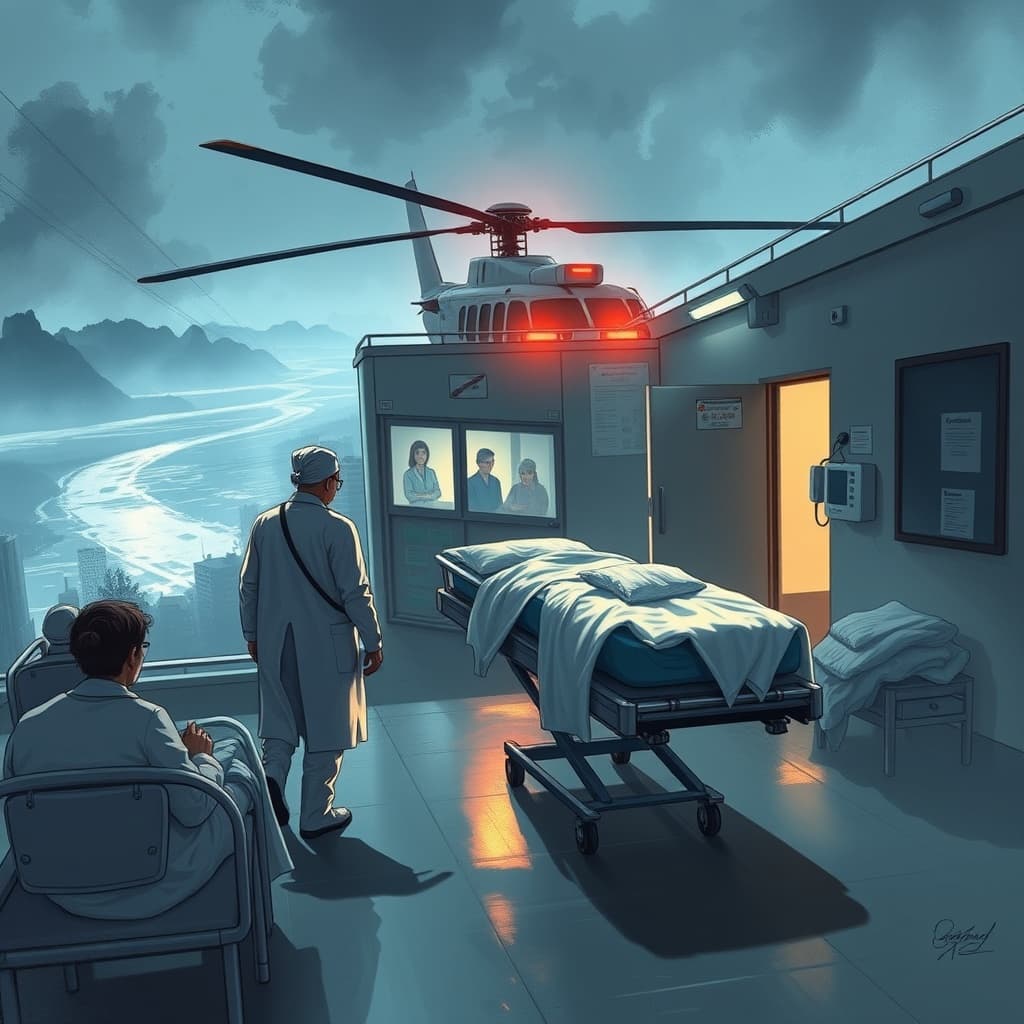
The helicopter lands on the hospital's rooftop helipad with a jarring thud. Medical staff rush forward with a gurney as the rotors wind down. Your leg wound is quickly bandaged, and you're wheeled through emergency doors into a brightly lit corridor that smells of antiseptic and fear. The hospital is chaos—every bed filled with flood victims, doctors shouting orders, children crying. A nurse checks your vitals while a doctor examines your alligator wounds. 'You're lucky,' he says grimly. 'Another inch and it would've severed the tendon.' As he stitches you up, the building suddenly shudders. The lights flicker. Through the window, you see it—a distant wall of white water rolling through the valley. The dam has broken. The doctor's face goes pale. 'The lower floors,' he whispers. An alarm begins blaring. A voice over the intercom: 'ALL PERSONNEL AND PATIENTS TO FLOORS THREE AND ABOVE IMMEDIATELY. THIS IS NOT A DRILL.' You're on the second floor, and the elevators just shut down for safety protocols. Around you, people begin to panic.
Available Choices
Scene 16
You limp quickly toward the stairwell, joining the flood of people rushing upward. Behind you, you hear crashes and screams as the water hits the ground floor. You reach the fourth floor just as the stairwell below begins to flood, sealing off anyone still down there.
Scene 17
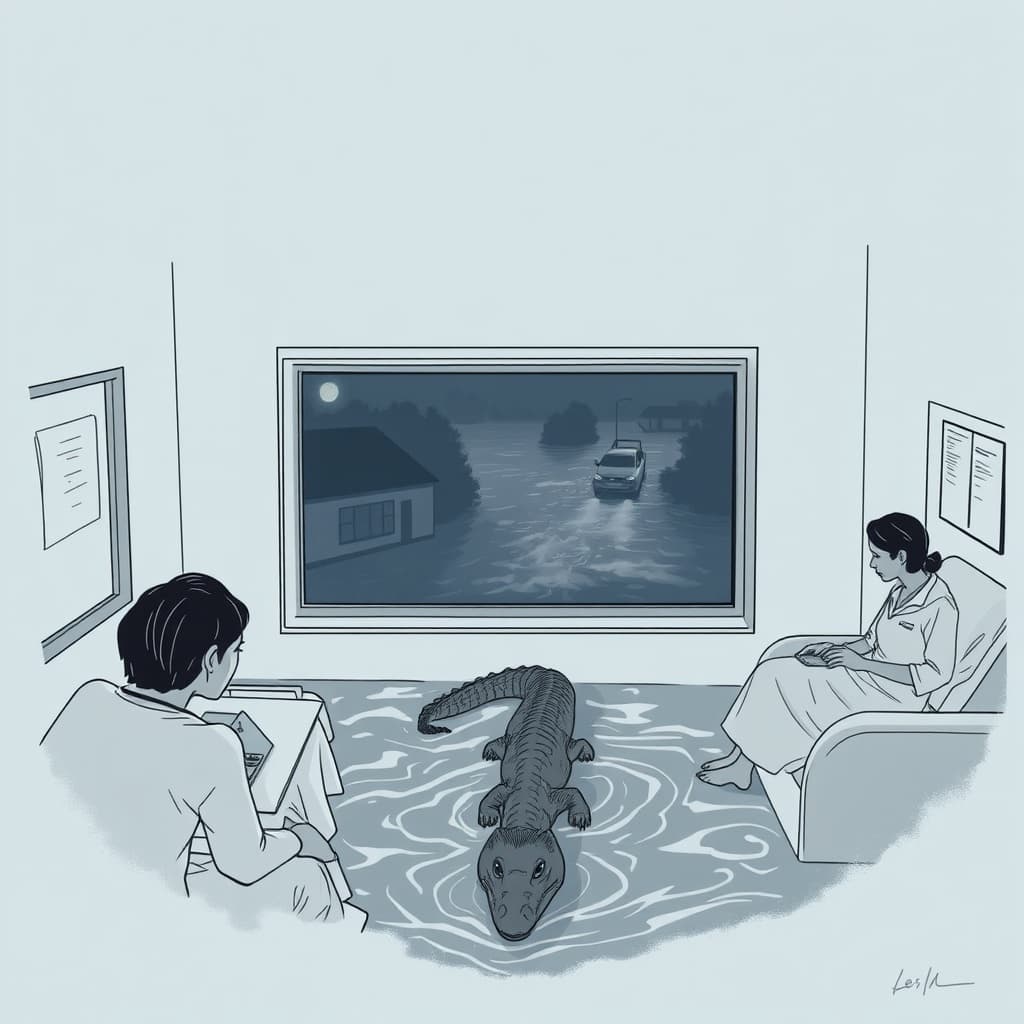
The fourth floor of the hospital has become a makeshift refuge. You're among roughly sixty people—patients in hospital gowns, medical staff still in scrubs, visitors who were trapped by the flood. Through the windows, you watch the new floodwater churning below, carrying entire vehicles and sections of buildings. The water level stabilizes about halfway up the third floor, but you can hear things moving in the flooded darkness below—scraping sounds, splashes, and occasionally that distinctive hissing. The alligators have followed the flood into the hospital. A doctor named Martinez takes charge, organizing people to barricade the stairwell door with furniture. Your phone, miraculously, still has 8% battery and a weak signal. You have three missed calls from your sister in Colorado and a text from an unknown number that reads: 'SURVIVORS RALLY POINT - CENTENNIAL BRIDGE - DAWN.' It's 3:47 AM now. Through the rain-streaked windows, you spot movement on a rooftop across the street—at least a dozen people are stranded on what looks like an apartment complex, waving flashlights desperately. No helicopters are visible anymore. Martinez approaches you, noticing you're one of the few people still mobile and uninjured. 'We need to make a decision,' she says quietly. 'We have maybe six hours before people start dying from lack of medication and treatment. The radio says military rescue boats are staging at the bridge at dawn, but that's two miles from here through flooded streets.'
Available Choices

Comments (0)